
For doing yoga at the natural , minimum is
Eco-friendly, organic, natural and non-slip yoga mat
Latex Non-Slip Yoga Mat - Cork, Hemp or Burlap Surface
yoga mat
Choosing your yoga mat
Why do we need a yoga mat?
The yoga practice has become very democratized and many choices of practices and philosophy are open to us. The Iyengar , the
Purists would say there is no need for rugs to practice, and it is true, the yoga originally was practiced on unstable yoga mats, which are still relevant today.But if the yogis from time to time have received evolution technique and had today's technology available to them, can we imagine they refused yoga props
Styles of dynamic yoga like ashtanga or the vinyasa yoga are the most demanding mats anti-slip Practices that make a lot sweat , It is difficult to realize the exercise of the alignment of the
A non-slip mat is therefore one of the characteristics to look at before buying a rug .
Yoga mat - Comparator and Horizon 2020 Guide
There is a great choice when you type on the internet yoga mat brand or
Achamana has chosen to specialize in the segment of high-end organic yoga mats Comfort, safety and holistic designs in a "yoga spirit" to offer a very personalized and inspiring pre-square. A comfortable universe secured on a natural carpet, good cushioning to protect your joints and a soft touch so that your feet are in heaven. Patterns in velvety colors that diffuse energy mandalas, chakras in Sanskrit, mantra, mudra, chin mudra and Lotus, Om and Tibetan Aum. A natural, energizing universe, diffusing positive vibrations. Experience savasana or meditation with a yoga mat with spiritual or holistic pattern, one of our yoga mats flower of life yoga.
If you prefer a cheap yoga mat to be replaced often, you've come to the wrong place. If your search is an investment for a mat that will last and accompany you for a long time in your spiritual quest, connected to the values of yoga and spirituality, then we share the same path and you will be delighted.
Although we only offer ecological yoga mats, we owe you an objective analysis of all the main possibilities existing on the market in order to help you make your choice according to your aspirations, your yoga level, your style, Iyengar, yoga nidra, Hatha yoga, Vinyasa, Kundalini yoga, Bikram? And so the asanas or kryas that you commit to performing
Whether you buy your yoga mat from Achamana or another online store, here are the essential qualities of a good yoga mat that you should consider to durable, comfortable and safe use.
- Thickness
- Adhesion
- Matter
- Weight
- The format
- The price
Thickness:
It ranges from 1mm to 15mm, but those over 6mm are to be considered exclusively for Pilates whose exercises are mainly done on the floor or as a gym mat. The gym mats that you can easily find at intersport, addidas or decathlon are much too thick and soft
Obviously, the thicker the mat, the more it acts as a cushion for your knees and your spine which are ultra protected and the less you feel the hardness of the floor. Be careful though, a mat very thick will be very comfortable in lying positions but very unsettling in standing exercises, you have to find the right balance between cushioning and balance. A real yoga mat cannot and should not have the same softness as meditation cushions or even a yoga cushion.
According to the appreciation of many practitioners, 4 to 5mm is ideal to guarantee sufficient damping for your joints while preserving balance in the realization of your asana.
However, some yogics still find them too thick and prefer 3mm mats because the less the mat is thick the more balance is present. A 4 or 5 mm thick mat in a dense material allows you to move from a series of asanas to a phase of relaxation with the same ease. It has the advantage of being versatile and suitable for most types of yoga.
The foldable yoga mat is 1 to 2 mm. It is a modern yoga mat with a surface generally made of microfiber. A foldable mat that is very practical and very lightr which does not need carrying bags or carrying strap. You can carry it easily, without bags, on the metro, by bike or while travelling, and do yoga in Paris and anywhere without constraints. A travel yoga mat that can be used as a on mat at the yoga studio, it will be more stable than a towel and even make students and your yoga teacher envy with its shimmering color, its very beautiful prints and its lightness.
Good grip:
The more the mat is non-slip, the happier the yogi is with his yoga session. A small downside, too much is the enemy of good, yoga mats made of 100% natural rubber, including the work surface, tend to be a little too much.Hyper sticky it blocks the fluidity of the asana sequences and, at best, does not sufficiently work the muscles that the postures seek to solicit at worst, can cause dislocations knee or elbow. You need a non-slip yoga mat but not super sticky.
The format:
The usual format is 60 cm wide and 1.70 m long. The rule is simple you must be able to do the eagle pose "Garudasana" as comfortably as you can do Savasana "corpse pose
Material:
The breath is a vital part of any yoga practice. Unfortunately, this action and the way we practice in general can do our bodies more harm than good. conventional and popular yoga mats are made of polyvinyl chloride (PVC). Our advice is absolutely against him, we will develop our reasons a little further.
In a yoga spirit, of uniqueness to oneself and to the universe, a organic and noble yoga mat is a wise choice but it depends on your passion for the practice and your budget, you You can also opt for an eco yoga mat such as the TPE or the PER which will accompany your practice until the next inevitable step: the mat of ecological or organic yoga.
If we are talking about materials, we must consider the seven basic principles: density, comfort, stability, durability, grip, softness, and
Each has its advantages and disadvantages, you will have a complete guide on this a little later.
The weight:
The less the yoga mat weighs, the easier it is to transport. Yoga mats range from 0.9 kg to 3.9 kg. The heaviest are rugs made of natural materials, especially rugs made of natural materials. It's up to you to prioritize and assess the real impact of the weight of an organic yoga mat compared to a lighter mat made with other components more or less controversial.
The price:
This is where misunderstandings arise. You have all the prices and all the qualities from 15 euros on discount platforms to 250 euros for carpets a little less prestigious than their brands. A good TPE mat is generally between 45 and 80 euro and an ecological yoga mat between 60 and 140 euro depending on the materials, the format, the thickness, the designs and the brand awareness.
Our tips for getting started: To start doing yoga, it is better not to buy a mat right away. As a general rule, all yoga studios provide you with either free or rental basic yoga mats. Make sure it's not PVC, and start your initiation like that.(In this exceptional Covid period, it is obvious that this option is no longer valid) Once you feel that you are bitten s, so buy your own yoga mat as soon as possible, you can invest right away in an organic yoga mat or first go through an eco-responsible solution like the TPE which
A brand new range manufactured using a new 3-ply thermo-bonded process has just been born and gives very good performance (TPE on the floor, rubber intermediate layer and microfiber covering)
The different formats
Several sizes are offered by yoga mat brands, your choice should take into account your height and weight. If your size is rather large, you should orient yourself towards a large format mat, the heavier you weigh, the more you will need a thick but dense mattress.
-
The standard format:
-
- Thickness: 3 or 4 mm
- Width: 61cm
- Length: 1.71m
-
- The classic large format:
- Thickness: 4 mm
- Width: 61cm
- Length: 1.80 or 1.83 m
- The large XL format:
- Thickness: 5mm
- Width: 68cm
- Length: 1.83m
- XXL size:
- Thickness: 4 or 5 mm
- Width: 68cm
- Length: 2.15m
Of course the price will differ depending on the format and materials used.
The foldable travel yoga mat, an extra thin and light mat
The foldable yoga mat is a topper or travel mat. This is a special case, we are very close to the traditional yoga mat in its thickness of 1 to 2mm and the sizes follow the criteria of traditional mats. It's a yoga towel combined with the stability of a thin, dense rubber. It is suitable for nomadic yoga, in the great outdoors, while traveling or on the mat at the yoga studio.
The different materials available
There is a huge variety on the market that all differ in quality, performance and eco-accreditation.
PVC or vinyl
Advantages of PVC Mats
Inexpensive, the PVC mat has made its way among the gym mats. Most yoga beginners opt for a PVC mat. They are far cheaper than natural carpets. You can get a PVC yoga mat with its bag from 25 euros. They are usually available in many different colors or printed with beautiful patterns
The yoga floor mat made of PVC is relatively resistant, flexible and easy to clean, and for the most part machine washable. machine.
It is a mat in the category lightweight yoga mat.
Known disadvantages of PVC yoga mat
However, we advise even yoga beginners not to practice on these mats. Add a few euros and you will have at least one PTE yoga mat which remains, in any case, more ecological and respectful of your health.
Why go to all the trouble to avoid PVC (vinyl) plastic?
Lead, Phthalates, VOCs, Dioxins, well-established carcinogenic chemicals and endocrine disruptors that wreak havoc on our bodies
Flexible vinyl is the most problematic, even more toxic due to stabilizers (like lead and other heavy metals), plasticizers (like phthalates) needed to make it more flexible.
Lead is often added to vinyl products as a stabilizer to extend their life. It is estimated that 45,000 tonnes of lead are released into the environment each year during disposal by incineration.
Phthalate-free PVC cannot be called "safe plastic" due to other harmful chemicals often used in production.
Depending on the manufacturing methods, it may still contain dioxin (a known carcinogen), volatile organic compounds, lead, cadmium and other heavy metals.
Heat and humidity can increase the volatility of these chemicals.
In conclusion: Heat and humidity are common (and even expected) in yoga class, if you use a PVC mat, the conditions are conducive to the release of toxic compounds. Lovers of hot yoga, I invite you first to take another solution for your well-being and that of others.
EVA, the preferred harmful material for the gym or pilates
Advantages: Cheap yoga mat
Disadvantages: Ethylene vinyl acetate makes up the EVA yoga mat. It is a synthetic material that is both lightweight and resistant to cracking. EVA yoga mats are moisture resistant and easy to clean after your session. They tend to stretch a bit as you train.
It is undeniable that EVA, which is absolutely not rubber, still contains chemicals. Widely used in the flip-flop industry, EVA is also used for floor mats, sport mats which unfortunately are commonplace in a gym, Pilate or gym. These carpets are soft and malleable when first used, but very quickly they become brittle and shapeless.
We place them at the same level of toxicity as the PVC yoga mat, less durability and performance.
The ethic of yoga is not to harm yourself or others. It seems inconceivable to us to want to work your chakras on a material that cannot be recycled and far from being non-toxic. Non-renewable and non-recyclable materials, which use limited resources to end up in the ocean or in landfills. Starting yoga under these conditions is, in our humble opinion, not desirable.
TPE - thermoplastic elastomer
Advantages of TPE mats
TPE mats are much more environmentally friendly than PVC mats, with a supposedly neutral harmfulness. They are considered eco friendly.
Lightweight: TPE foam mats have the advantage of being very light. This makes them ideal for carrying them, bag on the shoulder, effortlessly to the yoga studio or for a fitness session.
Anti-slip: They are more anti-slip on the floor side than PVC ones. Although they are not as sticky as natural rubber mats, they still have a much better grip than PVC mats.
Inexpensive, they are, in terms of quality, between PVC mats and those made of natural components You can buy them in a price range between 45 and 75 euro depending on the thickness , design, texture/feel and notoriety of the yoga mat brand. The baya brand has made a name for itself in this market segment, but they are drifting towards PVC mats which cost less to manufacture.
Idisadvantages of TPE mats:
"TPE" thermoplastic elastomers are sold as an ecological alternative to PVC and marketed under the label "safe" or "safer" or even "green". The new fashionable yoga material is mainly made with this material, all props, mat, bag, brick, yoga wheel. It's a more stable compound that's made with closed-cell technology (so sweat, germs, and microbes don't get in), but it's too new to say how it interacts with our body. Although TPE is free of bisphenol-A (BPA), PVC, lead, phthalates and dioxins, its long-term safety still raises questions and concerns.
Closed cell materials means, in practice, that perspiration is not absorbed by the mat. The mat is therefore slippery by nature, although some can provide good grip with a very textured and rough feel. Small pimples which give a very unpleasant feeling for some yogis, but acceptable for others.
They are relatively fragile for long-term use. The foam-like countertop quickly leads to abrasion and visible marks. They are also much more difficult to clean
Rigid material: Unlike PVC or natural rubber, TPE is brittle and has trouble lying flat once unrolled. A TPE mat will tend to curl up at both ends in the direction it was rolled.
In conclusion, a yoga mat that is well suited for beginners, to start yoga, or people who practice yoga from time to time. Non-toxic yoga mat, it remains eco-responsible since recyclable, but less durable and textured for sufficient grip.
Why an ecological yoga mat if possible organic?
Practice in the principles of yoga. Act for oneself and others with the same benevolence. And then it's still more relax to do the downward facing dog pose "adho-muckha-svanâsana" or the posture of the grasshopper "Salabhasana" on a support where you can relax the position while recharging your batteries through the contact of a soft and natural touch.
Practice pranayama, devangari corresponding to ajna, fourth limb out of the eight of the yoga sutra of Patañjali. The discipline of the breath is real healing.
Inhale and the Prana brings in the energy by blowing on the flame. Exhale "apana" and the breath burns by evacuating toxins, thus facilitating the circulation of Kundalini which opens to the awakening of full consciousness.
Is it possible to practice pranayama in the midst of "VOC" of dioxide and other flying micro particles of heavy metals?
Be wary of "Safe PVC", "ecological PVC" greenwashing. Eco-friendly PVC does not exist, as many online shops unfortunately suggest, if a yoga site offers them, run away.
eco yoga mats are designed to minimize their socio-environmental impact A strong commitment to a yoga mat designed with low-impact materials that does not create unnecessary waste during production and after use . They are generally biodegradable or recyclable and made from sustainable materials.
Although at this level the choice becomes much more limited There are a variety of different organic or eco responsible yoga mats on the market which differ in their combinations natural materials, or not, in quality, performance and eco-accreditation.
Cotton, hemp and jute yoga mat
Mats are not sticky but provide natural soft textured surfaces.
Each of these fabrics are eco-friendly alternatives for your yoga practice. They are of vegetable origin, therefore biodegradable and renewable. The cotton yoga mat was the traditional mat in Mysore/Ashtanga practice, and it still is today.
However, due to their plant origin, their Ayurvedic identities, they are bound to be less durable than PVC. Burlap is the strongest of the three. Hemp, being a dense and more elastic fiber takes second place.
Yoga mats are usually very thin, there is no cushioning to expect. The grip on the ground is almost non-existent. They are perfect for purists. Perfect for taking an online yoga class on the carpet of your living room. You can also opt for a wool or woven fabric
rug for the same uses.Advantages: ecological, easy to clean
Disadvantages: less durable, less comfortable
Natural rubber yoga mat - Latex yoga mat
Advantages of the natural rubber mat: Very non-slip and ecological
A natural rubber yoga mat is simply incredibly non-slip. No more worry about slipping in certain positions and better concentration on the essentials : alignment and breathing. Anyone who's gone from PVC to rubber can't go back.
The tnatural rubber mats are made of a harvested, renewable and biodegradable material. From then on, this opens the way for a practice of yoga in full consciousness. It has damping properties far superior to those of a TPE.
Disadvantages of natural rubber mats
Probably the most important “against” argument is their prices: natural rubber mats are relatively expensive compared to other mats. For a real natural eraser you have to count 60 to 120 euro. However, if you've been practicing yoga for a while and are looking for a mat with great slip resistance, or are interested in durability, this will be an absolutely reasonable investment.
Disadvantages of 100% natural rubber:
They are relatively fragile. It is a natural material that has open pores that can let in dirt particles, bacteria and germs. That's why these rugs need a little more love than others in their maintenance.
You will need to clean and disinfect them regularly.A white cloth with a solution of white vinegar water and a few drops of antiseptic essential oils is more than enough
They weigh a lot more than their plastic relatives. If you often take your mat with you to the yoga studio, it is advisable to have a yoga mat bag or at least carry straps so that it is easy to transport.
Extremely non-slip , your hands and feet stick firmly. Although this is one of the qualitative points sought, in terms of safety and balance, a very sticky matcan slow down, even block, the chain fluid of asanas.
Even though many manufacturers advertise an anti-allergy slogan to latex, if you are sensitive to it, it is better to avoid it. In this case, you can take advantage of its properties without being in direct contact with the rubber by opting for a combi rubber mat.
Cork yoga mat
Cork is ecological, elegant, sober and practical
It is a call back to nature while respecting the yoga practice. Practicing on a cork yoga mat isolates you in a yoga studio and places you in the energy of nature.
It's not only aesthetic, it's also practical. It's a perfect material for all climates and all yoga styles and spaces, it's non-slip, durable and has excellent cushioning to help you to feel safe and supported during your practice.
Its natural waxy substance that does not absorb water and improves grip when wet. The more you sweat, the better! Perfect for hot yoga class and Bikram yoga sessions!
Harvested from the regenerating bark of cork oaks which are not felled for harvesting and will continue to live and produce for decades. It is a first-rate ecological ally. During the regrowth of the bark, this tree absorbs three times as much carbon dioxide ! Cork oak forests have a very high rate of biodiversity.
The cork yoga mats are 100% plant-based and are considered vegan and Ayurvedic.
You can't avoid burying your nose in a yoga mat in most yoga classes, so it's nice to have a self-cleaning organic yoga mat! Its natural antimicrobial qualities eliminate bacteria, providing a fresh, clean and hygienic carpet. Hypoallergenic, it repels dust, mold and small particles.
It is anti-static, water-resistant and elastic, it absorbs shock on impact and recovers its shape quickly. You can press the heel well in a posture without risk of deformation. Its texture gives better grip when wet. Do not hesitate to spray water moderately with a spray at the beginning of the yoga session, for dry hands.
These mats do not need Oeko tex certification, they are 100% natural, fully biodegradable and come from a sustainable source, mainly Portugal. This premium material combined with a natural rubber base results in a anti-slip mat and one of the best eco-conscious choices.
Hemp canvas yoga mat
The texture of a hemp practice area for yoga practice is second to none! hemp is textured, it naturally offers a good grip It has antimicrobial properties and, thanks to the woven fabric it ensures the air circulation by preventing perspiration from soaking in.
Hemp Yoga Mats are durable because Hemp is woven, the fibers are dense and tight. They have great elasticity while having great tensile strength. The hemp fabric reinforces the good hold of the natural rubber. Being hypoallergenic, it considerably reduces the risk of allergy.
Light in colour, therefore messy, it is not machine washable. No special cleaner needed. How to clean it? it is very easy to clean with an organic cleaning spray or with a homemade solution of water, white vinegar and essential oil of Tea Tree. Always use a white cloth. Leave to dry for a few minutes and your carpet is clean, ready to use.
For practitioners of Ashtanga yoga, practicing yoga on this mat is a treat. The base grips the floor, it is non-slip on the floor and the coating offers a natural, soft and resistant texture for a good grip and a very good grip. It has good abrasion resistance and is very durable.
Hemp is antibacterial, UV resistant and naturally mildew resistant.
Hemp is a fast-growing, highly renewable resource that puts little strain on the soil in which it is grown. Hemp is naturally resistant to pests, so no pesticides are needed and needs very little water to grow and thrive.
Hemp proponents claim it removes more carbon dioxide per hectare than most plants.
Burlap yoga mat
Like hemp yoga mats, they offer the perfect balance of comfort, style and performance. Jute fibers reinforce the rubbery structure providing better strength and durability. Burlap also has very good breathability and high tensile strength. Eco-friendly yoga mat of high quality, with a natural surface with natural anti-slip properties.
The natural gum and jute combination helps it stand out from the crowd with its distinctive look and earthy feel.
Better known than hemp, it is considered one of the most ecological mats by many yoga magazines. Jute fibers, most commonly found in Southeast Asia, are biodegradablematerials. The cultivation of jute like hemp has a positive impact on the environment. It grows quickly in hostile soils and consumes just as much carbon dioxide.
Guaranteed non-slip on the floor by its sticky base, its coating non-slip is a mixture of rubber natural is jute so as to retain the natural non-slip texture of the raw jute while eliminating its unpleasant roughness .Whether you practice yoga at home or in a yoga studio, you do not perform in sandals or even in socks this kind of mat,acupressure is kept in soft touch.
Yoga mat brand
The decathlon or addidas yoga mats are establishing themselves as a yoga mat brand for PVC mats, intersport, go sport and baya yoga mats specialize in PER / TPE materials, and other shops like Tayrona distribute brands of eco responsible yoga mat. The liforme brand offers 100% natural rubber. Achamana tyoga mats are eco-friendly, eco-responsible,organic, durable and professional. They offer a holistic design to create an inspiring and spiritual universe.
Natural yoga mat - Achamana
Achamana has clearly turned to this kind of organic yoga mat, but we are not perfect.
The only controversy with this type of pro yoga mat is the carbon impact. Only China has the tools and expertise to manufacture combi natural rubber mats.
It is for this reason that Achamana, not finding European suppliers, in an ethical coherence, contributes to the program 1% for the planet, donation organization for environmental associations. The Jute yoga mat is made in the United Kingdom.
We are constantly looking for a reliable, less carbon consuming alternative, but so far we have not found it. Even if great trust has been established with our suppliers, we ensure quality controls, production conditions and material analyzes by the international certification body SGS. The final product is certified.
Hoping that this guide and comparison of the different options will help you determine the value for money price to choose your yoga mat that you will roll out with joy at each session . You will have additional information with a yoga journal article if you wish. Whether for a yoga at home, in zen mode or at the yoga centre in group lessons, having your own mat is a bit like the secret garden of your soul, a long-term companion on your spiritual journey, a yoga mat connected to your inner self. A close friend who accompanies you with as much benevolence in a meditation as in a dynamic vinyasa.
Joys and Light - Good practice!

Une gomme de caoutchouc naturel au cœur de notre exigence
La qualité de notre gomme de caoutchouc naturel est le fruit de nombreux tests et d'une sélection exigeante. Sa densité et sa souplesse constituent le socle technique de nos tapis.- Une gomme dense de très haute qualité, pour une excellente adhérence au sol, sur une surface sèche ou légèrement humide.
- Une souplesse maîtrisée, pour des tapis qui restent bien à plat dès qu'on les déroule, sans que les coins se relèvent.

Le juste équilibre entre amorti et stabilité
Une épaisseur adaptée et une gomme suffisamment dense pour amortir les appuis sans s'écraser sous le poids du corps.- Du confort au sol, pour les genoux, les assises prolongées et les postures allongées.
- De la fermeté dans les appuis, pour conserver précision et stabilité dans les asanas debout, les équilibres et les inversions.

Des matières choisies, des exigences vérifiées
Liège, jute, chanvre, microfibre, PU ou similicuir : chaque surface est sélectionnée pour ses propriétés, son toucher et les sensations qu'elle apporte à la pratique.- Un assemblage par thermocollage : les différentes matières sont assemblées par la chaleur, sans colle ajoutée ni PVC, pour une construction homogène et durable.
- Des contrôles indépendants : des analyses réalisées par SGS, selon les exigences applicables de REACH et les seuils de substances contrôlées par RoHS.
- Des finitions attentives aux détails : des motifs dessinés en France, inspirés des mandalas, des chakras et de la géométrie sacrée, ainsi que des lignes d'alignement, présentes sur certains modèles, utiles aux débutants comme aux yogis expérimentés pour affiner leurs placements.

Tapis de yoga pour débutant
Pour débuter dans de bonnes conditions, quel que soit le style de yoga
Bien choisir son premier tapis, c'est s'offrir de bonnes conditions pour découvrir les postures et progresser à son rythme.
Une surface adaptée à votre transpiration, des appuis stables et un amorti confortable facilitent l'apprentissage. Nos tapis de yoga pour débutants permettent de porter toute son attention sur l'essentiel : le mouvement, l'alignement et leur coordination avec la respiration, sans distraction liée à l'équipement.


Tapis de yoga en liège
Convient à tous les yogas, du Nidra au Vinyasa
Plus vous transpirez, plus le liège accroche !
Agréable au toucher, le liège offre une adhérence évolutive qui s'intensifie au contact de l'humidité. Sa surface végétale, douce et facile à entretenir, accompagne aussi bien les postures au sol que les enchaînements dynamiques.
Pour accompagner les postures au sol, les équilibres, les pratiques douces et les enchaînements dynamiques, notre collection de tapis de yoga en liège propose différentes constructions, du liège associé au caoutchouc naturel aux modèles trois plis en TPE, caoutchouc et liège. Chaque surface se distingue par son toucher, sa texture, sa souplesse et son adhérence évolutive au contact de la transpiration.
Read more [+] Link [-]
- Pratiques : Hatha, Yin, Nidra, Vinyasa et autres styles de yoga.
- Confort : un amorti adapté aux postures et aux appuis, selon l'épaisseur et la construction du modèle.
- Adhérence : évolutive, particulièrement appréciable lorsque les mains deviennent humides.
- À savoir : pour des mains totalement sèches, l'accroche peut être moins adaptée aux postures exigeantes en appui sur les mains. Le liège reste intéressant pour les pratiques douces et au sol.
Formats : 5 et 6 mm × 68 cm × 1,83 m, et 5 mm en longueur de 2,15 m.


Tapis de yoga en chanvre et caoutchouc naturel
Pratique au sol ou posturale, du Yin yoga au Hatha
Une surface en fibres de chanvre, coton et microfibre, au toucher particulièrement doux, proche du daim. Absorbante et agréable au contact de la peau, elle accompagne les postures tenues, les étirements et les pratiques qui privilégient le confort au sol.
Pour les séances de Yin, de yoga restauratif ou de Hatha, la douceur textile et le confort des appuis font toute la différence. Notre sélection de tapis de yoga en chanvre et caoutchouc naturel associe cette surface souple à une base stable et amortissante, pour une pratique calme et attentive.
Read more [+] Link [-]
- Pratiques : Yin yoga, yoga restauratif, yoga intégral et Hatha.
- Confort : très bon amorti et toucher textile particulièrement doux.
- Adhérence : bonne, avec une accroche plus fluide que sur les surfaces à grip immédiat.
- À savoir : pour les mains totalement sèches, l'adhérence peut être insuffisante dans le chien tête en bas. Cette surface est également moins adaptée aux inversions exigeantes et aux yogas très dynamiques.
Format : 183 × 61 cm, épaisseur 4,5 mm.


Tapis de yoga en tissu microfibre, doux et confortable
Pour le yoga au sol et les yogas traditionnels
La douceur d'un toucher peau de daim, la fluidité du mouvement.
La microfibre offre une surface douce et absorbante, particulièrement agréable dans les postures au sol et au contact de la peau. Son adhérence augmente avec l'humidité, tandis que son toucher velouté facilite les transitions sans bloquer les mouvements.
Pour les séances de Hatha, de Yin yoga, de Pilates et les pratiques posturales qui privilégient le confort et la liberté de mouvement, notre sélection de tapis de yoga en microfibre associe cette surface textile à différentes constructions amortissantes, pour accompagner les étirements, les appuis prolongés et les changements de posture.
Read more [+] Link [-]
- Pratiques : Hatha, Yin, Nidra, Pilates et yoga traditionnel.
- Confort : toucher peau de daim et amorti généreux, selon la construction du tapis.
- Adhérence : évolutive, renforcée par la transpiration absorbée par la microfibre.
- À savoir : les pratiquants ayant les mains très sèches peuvent ressentir une légère glisse, notamment dans le chien tête en bas. L'adhérence de la microfibre s'intensifie avec la transpiration absorbée par sa surface. Sans cette humidité, le grip reste plus limité.
Formats : 183 × 68 cm, en 5 ou 6 mm d'épaisseur.


Tapis de yoga épais, conception 3 plis
Pour tous les yogas et Pilates - Confort et légèreté
6 mm de confort, de stabilité et de légèreté pour le yoga et le Pilates
Trois matières, pour le meilleur de chacune.
Le TPE pour l'adhérence au sol et la légèreté, le caoutchouc naturel pour l'amorti et la stabilité, et une surface de pratique au choix — microfibre, liège ou PU — pour une adhérence adaptée à votre transpiration et à votre style de yoga.
Pour les postures au sol, les équilibres et les enchaînements, avec un amorti généreux et des appuis stables, nos tapis de yoga épais 3 plis associent ces trois éléments dans une conception de 6 mm. Plus légers que nos modèles entièrement en caoutchouc naturel, ils offrent un confort appréciable pour les pratiques douces comme dynamiques.
Une alternative intéressante pour les pratiquants qui recherchent un tapis confortable et plus accessible, sans renoncer à la qualité de leur équipement.
Read more [+] Link [-]
- Construction : assemblage trois plis par thermocollage, sans colle ajoutée ni PVC.
- Pratiques : Hatha, Yin, Vinyasa, yoga traditionnel et Pilates, selon la surface choisie.
- Confort : amorti généreux de 6 mm, avec une bonne stabilité des appuis.
- Adhérence : variable selon la surface. Le PU offre une accroche immédiate, tandis que le liège et la microfibre développent davantage leur grip au contact de l'humidité.
- À savoir : les modèles en liège ou microfibre peuvent être moins adaptés aux mains très sèches dans les postures exigeantes. Le cœur en caoutchouc naturel est à prendre en compte en cas d'allergie au latex.
Format : 183 × 68 cm, épaisseur 6 mm.


Tapis de yoga en jute
Pour tous les styles de yoga et toutes les mains, sèches ou transpirantes.
Une adhérence naturelle, sans attendre la transpiration.
Les fibres végétales de jute, maillées puis intégrées au caoutchouc naturel, créent une surface texturée au caractère authentique. Nos tapis de yoga en jute et caoutchouc naturel offrent un toucher brut qui évoque un lien direct avec la terre et une sensation d'ancrage. Leur accroche immédiate assure des appuis fiables, même avec les mains sèches.
Cette matière accompagne les postures debout, les équilibres et les enchaînements de Hatha, de Vinyasa ou de yoga dynamique. Sa texture affirmée privilégie le contact avec la matière, la fermeté des appuis et une bonne résistance à l'usage.
Read more [+] Link [-]
- Pratiques : Hatha, Vinyasa, Ashtanga, yoga traditionnel et dynamique.
- Confort : surface ferme et texturée, avec un amorti plus modéré que nos modèles épais.
- Adhérence : immédiate, pour les mains sèches comme transpirantes.
- À savoir : le toucher plus brut et l'amorti modéré sont moins adaptés aux longues postures au sol, notamment en Yin ou en yoga restauratif. Le caoutchouc naturel est présent en surface : ce tapis ne convient pas aux personnes allergiques au latex.
Format : 183 × 64 cm, épaisseur 4 mm.


Tapis de yoga ultra antidérapant
Parfaits pour une pratique dynamique, Ashtanga, Vinyasa.
Une adhérence dès les premières secondes, que vos mains soient sèches ou transpirantes.
Pour tous les styles de yoga, particulièrement les pratiques dynamiques.
Dans les postures exigeantes, les équilibres et les transitions du yoga dynamique, la stabilité des mains fait toute la différence. Nos tapis de yoga antidérapants offrent un grip immédiat et puissant. Les mains restent fermement ancrées sur la surface en PU, même sans transpiration, pour des appuis précis et une totale liberté dans les enchaînements.
Le PU Soft Grip se distingue par son toucher légèrement spongieux et son accroche tactile très particulière, agréable au contact, presque addictive. Résistant à l'abrasion, il allie plaisir tactile et tenue à l'usage.
Le High Solid PU offre une adhérence immédiate et puissante, avec un toucher plus ferme et moins spongieux que celui du PU Soft Grip. Résistant à l'abrasion, il se distingue également par sa meilleure résistance aux rayures et sa facilité d'entretien.
Read more [+] Link [-]
Deux conceptions répondent à des attentes différentes : les modèles en caoutchouc naturel intégral, appréciés pour leur souplesse et leur confort supérieur, et les tapis trois plis de 6 mm, plus légers et accessibles, qui conservent un amorti confortable malgré une souplesse moins prononcée.
- Pratiques : Hatha, Vinyasa, Ashtanga, yoga traditionnel et dynamique, ainsi que les pratiques douces.
- Confort : excellent sur les modèles en caoutchouc naturel intégral ; bon amorti sur les trois plis de 6 mm, avec une souplesse légèrement inférieure.
- Adhérence : immédiate et très accrocheuse, pour les mains sèches comme transpirantes.
- Surfaces : PU Soft Grip, au toucher légèrement spongieux et à l'accroche tactile distinctive ; High Solid PU, résistant à l'abrasion et aux rayures, facile à nettoyer.
- Conceptions : caoutchouc naturel avec surface en PU Soft Grip ou High Solid PU ; trois plis avec surface en High Solid PU.
Formats : 185 × 68 cm en 5 mm d'épaisseur pour les modèles en caoutchouc naturel ; 183 × 68 cm en 6 mm pour les modèles trois plis.


Tapis de yoga de voyage pliable
Pour un yoga nomade sans contrainte ou en sur tapis.
Envie de pratiquer librement, même loin de chez soi ? Très fins, légers et faciles à transporter, nos tapis de yoga de voyage pliables se glissent dans une valise ou un sac à dos, sans occuper l'espace d'un tapis traditionnel. Leur surface antidérapante offre une excellente accroche pour retrouver des appuis stables, où que la pratique vous mène.
En voyage, lors d'une retraite de yoga ou pour une séance improvisée en extérieur, ils permettent de conserver son propre espace de pratique. Au studio, ils deviennent un sur-tapis personnel à installer sur les tapis collectifs, pour retrouver une surface familière et agréable au contact.
Read more [+] Link [-]
- Pratiques : Hatha, Vinyasa, Ashtanga et autres styles de yoga, selon le confort du support.
- Transport : tapis fin, léger et pliable, facile à glisser dans un bagage ou à transporter avec une sangle.
- Adhérence : surface antidérapante offrant une excellente accroche pour les postures et les enchaînements.
- Confort : épaisseur de 1,2 mm, avec très peu d'amorti. Pour les postures prolongées au sol, privilégier un support adapté.
- Utilisation : seul en voyage ou comme sur-tapis personnel sur un tapis collectif en studio.
Formats : 183 × 61 cm ou 183 × 68 cm, épaisseur 1,2 mm.


Tapis de yoga rond - Pratique et méditation
Pour pratiquer un yoga postural ou une méditation inspirante à la maison ou en pleine nature.
La forme circulaire invite à explorer les postures et les mouvements dans toutes les directions, sans orientation imposée. Nos tapis de yoga ronds offrent un espace de pratique de 140 cm de diamètre, avec une base en caoutchouc naturel et une surface douce en liège ou en microfibre.
À la maison, dans un jardin ou au cœur d'un paysage inspirant, le cercle devient un espace à soi. Les motifs et leurs symboles peuvent accompagner la méditation, comme des points d'attention autour desquels le calme s'installe et la présence à soi se révèle.
Read more [+] Link [-]
- Pratiques : Hatha, yoga postural, yoga doux, méditation et relaxation.
- Confort : épaisseur de 3 mm, avec un amorti modéré.
- Adhérence : évolutive selon la surface en liège ou microfibre et le degré de transpiration.
- Mobilité : tapis transportable, utilisable à la maison ou en extérieur sur un sol adapté.
- À savoir : avec les mains très sèches, l'accroche peut être moins adaptée aux postures exigeantes en appui.
Format : diamètre 140 cm, épaisseur 3 mm.


Grand tapis de yoga
Pour les yogis et yoginis de plus d'un mètre quatre vingt ou une Savasana plus confortable
Plus d'espace pour donner toute sa place à la pratique.
Pour les personnes de grande taille, les postures allongées, les étirements amples et une Savasana plus confortable, nos grands tapis de yoga offrent davantage de longueur, de largeur et d'espace pour les appuis. Une surface généreuse qui permet de déployer les mouvements, de profiter pleinement des postures au sol et de pratiquer sans se sentir à l'étroit.
Particulièrement appréciés des personnes mesurant plus de 1,80 m, ils répondent aussi à une envie simple : dérouler son tapis et profiter pleinement de son espace, des postures debout jusqu'au relâchement en Savasana.
Read more [+] Link [-]
Pratiques : Hatha, Yin, Vinyasa, yoga postural, méditation et relaxation.
Pour qui : personnes de grande taille ou pratiquants recherchant davantage d'espace.
Confort : une longueur supplémentaire appréciable pour les postures allongées et les mouvements amples.
Adhérence et amorti : selon la matière, l'épaisseur et la conception du modèle.
À savoir : choisir les dimensions en fonction de sa morphologie et de l'espace disponible pour pratiquer.
Tapis de yoga ovales
Ni coins ni limites, juste votre pratique
Et si votre tapis sortait du cadre ?
Des courbes douces, une silhouette épurée, une autre façon d'habiter l'espace. Le tapis ovale s'affranchit des lignes traditionnelles pour dessiner un espace de pratique à part, aussi élégant dans un intérieur qu'agréable à retrouver chaque jour.
Sa forme accompagne naturellement les mouvements, des premiers étirements aux enchaînements plus fluides. Sous les mains, deux sensations : la douceur végétale du liège, dont l'adhérence s'intensifie avec l'humidité, ou le grip immédiat et puissant du High Solid PU. Une base en caoutchouc naturel apporte stabilité, souplesse et confort.
Read more [+] Link [-]
- Pratiques : Hatha, Vinyasa, Yin yoga, Pilates et fitness.
- Confort : caoutchouc naturel, épaisseur de 5 mm.
- Adhérence : évolutive pour le liège ; immédiate et puissante pour le High Solid PU, même avec les mains sèches.
- Design : silhouette ovale aux courbes épurées, pensée pour accompagner la pratique et s'intégrer harmonieusement à votre intérieur.
- À savoir : pour les mains très sèches et les postures exigeantes, privilégier le High Solid PU.
Format : 183 × 66 cm, épaisseur 5 mm.


Tapis de yoga enfants
Pour les petits yogis qui veulent faire comme les grands !
Un tapis déroulé à côté de celui de maman ou papa, deux sourires qui se répondent, une posture imitée avec application… Avec leurs dimensions adaptées aux plus jeunes, nos tapis de yoga enfants accompagnent ces séances de yoga ou de gymnastique, moments de complicité et de partage où petits et grands découvrent le plaisir de bouger ensemble.
Leurs motifs pleins de fantaisie, leur amorti confortable et leurs appuis stables offrent aux enfants un espace bien à eux, pour apprendre, explorer et grandir dans leur pratique.
Chats yogis, fruits et légumes ou personnages féeriques : chaque univers éveille la curiosité et donne envie de découvrir de nouvelles postures. Les repères de position guident les premiers placements des mains et des pieds, pour accompagner progressivement l'apprentissage du yoga, entre concentration, équilibre et plaisir de pratiquer.
Read more [+] Link [-]
- Activités : yoga, gymnastique, danse, étirements et jeux calmes.
- Confort : conception trois plis de 6 mm, avec un amorti généreux pour les appuis au sol.
- Surfaces : liège ou microfibre, douces au toucher.
- Repères : marqueurs de position pour découvrir les placements des mains et des pieds.
- À savoir : choisir la longueur du tapis selon la taille de l'enfant.
Formats : 151 × 61 cm ou 171 × 61 cm, épaisseur 6 mm.
Tapis de yoga à prix doux
De belles découvertes à prix léger, jusqu'aux dernières pièces
La même exigence, le plaisir d'un prix plus doux.
Une couleur qui tire sa révérence, un motif qui quitte la collection… Certains tapis méritent encore de belles séances de yoga. Retrouvez nos tapis de yoga à prix doux, une sélection de modèles en fin de série, proposés à tarif réduit sans compromis sur la qualité de leurs matières ni sur le confort de votre pratique.
C'est l'occasion de découvrir un tapis qui vous ressemble, de profiter d'un modèle que vous aviez remarqué ou simplement de vous faire plaisir. Les quantités sont limitées : une fois les dernières pièces parties, ces références ne seront plus disponibles.
Read more [+] Link [-]
- Sélection : fins de série, motifs et coloris en arrêt de collection.
- Qualité : mêmes exigences de conception et de contrôle que les autres tapis Achamana.
- Pratiques : selon les caractéristiques de chaque modèle.
- Confort et adhérence : selon la matière, l'épaisseur et la conception du tapis.
- À savoir : stocks limités et disponibilités variables selon les références.

Choisir le bon tapis en fonction de sa pratique et de son corps
Un même yoga, des sensations différentes. Adhérence, confort, stabilité : quelques repères pour trouver le tapis qui correspond à votre corps, à votre pratique et à vos attentes.
Yoga débutant, quel tapis choisir ?
Pour ses premières séances, le bon tapis n'est pas nécessairement le plus technique. C'est celui qui permet de découvrir les postures avec confiance, de trouver ses appuis et de porter son attention sur le mouvement plutôt que sur son équipement.
L'essentiel se joue dans trois sensations : une adhérence adaptée à la transpiration des mains, un amorti confortable pour les genoux et les postures au sol, et une stabilité suffisante pour travailler l'équilibre.
Nos tapis de yoga trois plis de 6 mm constituent une option intéressante pour débuter. Leur conception associe confort, légèreté et stabilité, tandis que certains motifs intègrent des repères d'alignement pour accompagner les premiers placements.
Mais le choix reste personnel : une pratique douce, des mains très sèches ou des séances dynamiques ne sollicitent pas le tapis de la même manière.
Voir les tapis de yoga adaptés aux débutants
Choisir son tapis selon sa pratique et ses sensations
Deux personnes pratiquant le même yoga n'auront pas nécessairement besoin du même tapis. La transpiration, la sensibilité des articulations, la recherche de stabilité ou de liberté dans les mouvements influencent autant le choix que le style de yoga.
L'adhérence est souvent le premier critère à considérer. Certaines surfaces accrochent immédiatement, même avec les mains sèches ; d'autres développent leur grip au contact de l'humidité. Le confort compte tout autant : une gomme suffisamment dense amortit les appuis sans compromettre l'équilibre, tandis qu'une surface plus douce accompagne agréablement les postures prolongées au sol.
Un tapis adapté permet ainsi de trouver le juste équilibre entre adhérence, stabilité, amorti et liberté de mouvement, selon les sensations recherchées.
Pour les mains transpirantes ou Hot yoga :
Une forte transpiration peut entraîner un manque d'adhérence sur une surface inadaptée. Si vous avez tendance à beaucoup transpirer, voici les matières qui peuvent vous convenir :
- Le liège, matière naturelle très antidérapante à mesure qu'elle s'humidifie.
- Le similicuir, qui offre un grip tactile puissant, aussi bien avec les mains transpirantes que sèches.
- Le PU (polyuréthane), qui procure une excellente accroche, avec ou sans transpiration.
- La fibre de jute naturelle, dont l'adhérence est efficace sur mains sèches comme humides.
- La microfibre Suède, ultra-absorbante et particulièrement douce. Légèrement plus glissante que les surfaces précédentes, elle favorise la fluidité des enchaînements dans les yogas flow, mais peut nécessiter de réajuster certains appuis.
Pour les mains sèches qui glissent :
Avoir les mains et la plante des pieds très sèches peut gêner l'adhérence, notamment dans les postures qui demandent des appuis fermes. Si vous ne transpirez pas du tout, privilégiez les surfaces qui offrent une accroche immédiate :
- La fibre de jute naturelle
- Le similicuir
- Le PU (polyuréthane)
Pour faire un yoga dynamique ou intense, Vinyasa, Ashtanga :
Les enchaînements rapides et les appuis répétés demandent une adhérence fiable, sans perdre la liberté de mouvement nécessaire aux transitions. Plusieurs surfaces conviennent à ces pratiques :
- Le similicuir, pour son grip tactile puissant et immédiat.
- Le PU (polyuréthane), pour son excellente accroche, même avec les mains sèches.
- Le liège, dont l'adhérence augmente avec la transpiration.
- La fibre de jute naturelle, pour son accroche efficace sur mains sèches comme humides.
Pour un yoga postural, Hatha, Intégral, Iyengar ou un yoga flow :
Ces pratiques privilégient la précision des placements, la stabilité des appuis et le confort dans les postures tenues. Selon votre transpiration et les sensations recherchées, plusieurs surfaces peuvent convenir :
- Le similicuir, le PU, le liège et la jute, déjà présentés pour les pratiques dynamiques.
- La microfibre, pour sa douceur et la fluidité qu'elle apporte aux mouvements.
- Les tapis de 6 mm à conception trois plis, pour leur équilibre entre amorti, stabilité et légèreté.
Pour faire un yoga doux ou au sol comme le Yin yoga ou du Pilates :
Dans les pratiques douces, les postures prolongées et les exercices au sol, le confort prend une place particulière. Un amorti suffisant et une surface agréable au toucher permettent de rester plus longtemps dans les postures, sans négliger la stabilité.
Plusieurs tapis peuvent convenir :
- Les tapis déjà présentés, selon les sensations et l'adhérence recherchées.
- Les tapis en chanvre, particulièrement appréciés pour leur toucher textile doux et leur confort au sol.
- Les tapis de plus de 4 mm d'épaisseur, pour bénéficier d'un amorti plus généreux, selon leur densité et leur conception.
À retenir : un tapis plus épais n'est pas automatiquement plus confortable. La densité de la gomme et sa capacité à amortir les appuis sans trop s'écraser jouent également un rôle essentiel.
Pour les yogi-ni-s de grande taille :
Au-delà de 1,80 m, quelques centimètres supplémentaires peuvent faire une réelle différence. Un grand tapis de yoga permet de déployer les postures avec davantage d'aisance, notamment dans les inversions et pendant Savasana, lorsque le corps s'allonge complètement.
Plusieurs formats sont proposés selon les matières :
- Caoutchouc naturel et liège : jusqu'à 2,15 m de longueur.
- Caoutchouc naturel et fibres de jute : jusqu'à 2,10 m de longueur.
- Laine mérinos : 2 m de longueur, particulièrement appréciable pour les pratiques douces et restauratives.
Au sujet des allergies au latex
Tous les tapis présentés sur cette page contiennent du caoutchouc naturel, qui peut renfermer des protéines de latex responsables de réactions allergiques.
Selon leur conception, le caoutchouc n'est pas situé au même endroit :
- Tapis en liège, microfibre, chanvre, similicuir ou PU : le caoutchouc naturel forme la base, côté sol. Il reste apparent et peut être touché lors de la manipulation du tapis.
- Tapis à conception trois plis : le caoutchouc naturel est enfermé au cœur du tapis, entre la base en TPE et la surface de pratique. Il n'est donc pas en contact direct avec la peau lors d'une utilisation normale du tapis.
- Tapis en jute : le caoutchouc naturel est également présent dans la surface de pratique.
En cas d'allergie connue ou suspectée au latex, demandez conseil à un professionnel de santé avant d'utiliser un tapis contenant du caoutchouc naturel.
Les tapis de yoga Achamana
Comment sont conçus les tapis de yoga Achamana ?
Les tapis de yoga Achamana sont des tapis combi-caoutchouc naturel : notre gomme de caoutchouc naturel, en base ou au cœur du tapis, est associée à une surface dans une autre matière. Cette combinaison conserve l'amorti et la stabilité du caoutchouc naturel, tout en permettant de régler finement le grip, fluide, évolutif ou accrocheur, selon votre pratique et votre tendance à transpirer.
- Combi 2 matières : une base en caoutchouc naturel, qui tient le tapis au sol, et une surface en liège, jute, chanvre-coton-microfibre, microfibre, similicuir ou PU.
- Combi 3 matières (3 plis) : une base en TPE profilée sans PVC, qui tient le tapis au sol, un cœur en caoutchouc naturel et une surface en liège, microfibre ou PU.
Les matières sont assemblées par thermocollage, à chaud, sans colle ni additif.
Les analyses de nos tapis
Nos tapis sont analysés par un laboratoire SGS selon la réglementation européenne REACH et les seuils RoHS, qui fixent les teneurs maximales de 10 substances, dont le plomb, le mercure, le cadmium et quatre phtalates. Le détail des analyses est sur notre page consacrée au laboratoire SGS qui analyse nos tapis de yoga.
REACH
Le règlement REACH (règlement européen n° 1907/2006), entré en vigueur en 2007, vise à mieux encadrer la fabrication et l'utilisation des substances chimiques dans l'Union européenne. Il prévoit l'enregistrement, l'évaluation, l'autorisation et la restriction de certaines substances chimiques fabriquées, importées ou mises sur le marché européen.
Il a pour objectif d'améliorer la connaissance des dangers liés aux substances chimiques. Les dispositifs mis en œuvre permettent de mieux maîtriser les risques pour la santé humaine et l'environnement.
Quels sont les engagements environnementaux d'Achamana ?
Nous finançons la collecte et le recyclage de nos emballages avec Citeo (identifiant ADEME : FR286031_01YMHM) et la fin de vie de nos tapis et accessoires avec Ecologic, l'éco-organisme des articles de sport et de loisirs (identifiant ADEME : FR286031_13GCIX).
Membres de 1% for the Planet, nous reversons 1 % de notre chiffre d'affaires à des associations environnementales agréées.
Pourquoi des motifs sacrés sur nos tapis ?
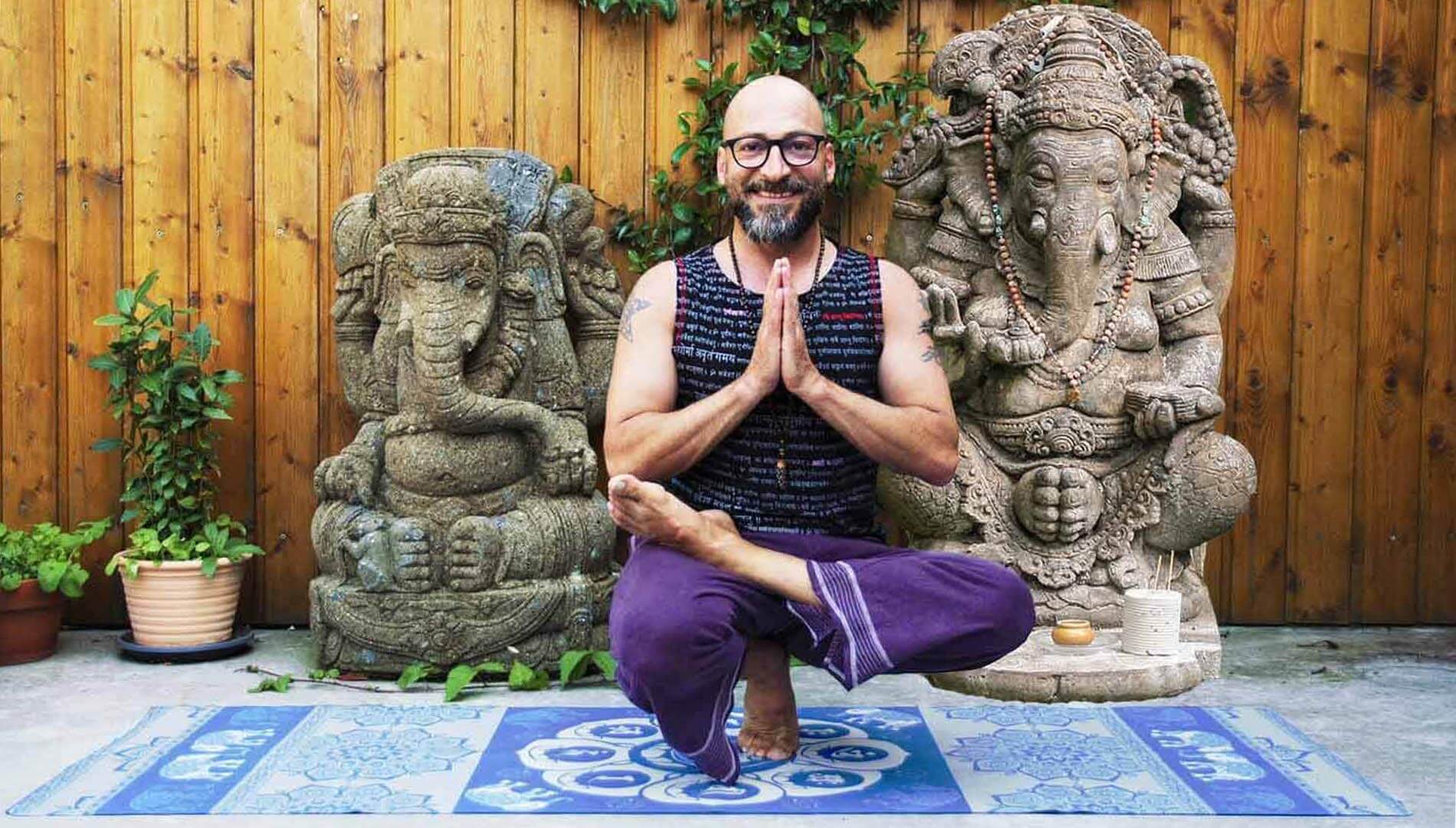
Mandalas, chakras, mantras, fleur de vie : ces symboles sacrés accompagnent la pratique du yoga et de la méditation depuis des siècles. Nous les dessinons comme des supports d'attention et d'intention, qui donnent une âme à votre tapis : un point où ancrer le regard, un univers inspirant qui vous invite à élever votre énergie.
Le design qui vous attire est souvent celui qui fait vibrer quelque chose en vous, et qui vous donnera encore plus l'envie de dérouler votre tapis chaque jour.
Comment sont réalisés les motifs ?
Selon les modèles, les motifs sont imprimés avec des encres à base d'eau ou gravés au laser. Les encres utilisées résistent au temps et à l'usure.
Où sont conçus et fabriqués vos tapis de yoga ?
La conception technique, les tests de la gomme et la création des motifs sont réalisés en France. Nos tapis en caoutchouc naturel et jute sont fabriqués au Royaume-Uni, nos tapis en laine mérinos en Suède, et tous les autres en Chine, chez notre partenaire de longue date, avec lequel nous entretenons une collaboration étroite et en constante évolution.
Pourquoi nos tapis de yoga sont-ils fabriqués en Chine ?
Nous avons cherché, et cherchons encore, un fabricant français ou européen pour l'ensemble de la gamme. Le seul que nous ayons trouvé, au Portugal, n'atteignait ni notre exigence sur la souplesse de la gomme de caoutchouc ni la finesse d'impression de nos motifs. Notre partenaire chinois respecte notre cahier des charges, et nos tapis sont analysés par un laboratoire SGS selon REACH et les seuils RoHS.
Nous sommes conscients de l'empreinte environnementale liée au transport de nos produits. Notre engagement auprès de 1% for the Planet s'inscrit dans une démarche plus large de soutien à des initiatives environnementales.
Comment sont testés les tapis de yoga Achamana ?
Chaque tapis est testé par notre réseau de yogis et de professeurs de yoga en France avant d'être commercialisé, dans différents styles : Hatha, Ashtanga, Vinyasa, hot yoga, yoga intégral, Yin yoga, Iyengar. C'est en fonction de leurs retours que les surfaces diffèrent d'un type de tapis à l'autre. Notre gomme de caoutchouc naturel, base de l'identité des tapis Achamana, reste la même.
Pourquoi s'offrir un tapis de yoga haut de gamme ?
S'offrir un tapis de yoga haut de gamme, c'est investir dans un compagnon durable pour votre pratique. Plus qu'un accessoire, c'est un espace confortable et sécurisant qui vous accompagne pendant des années. Son design inspirant vous donne encore plus l'envie de dérouler votre tapis, même les jours difficiles.
Comment nettoyer mon tapis de yoga ?
Pour préserver votre tapis de yoga, privilégiez un entretien doux, adapté à sa surface et à sa fréquence d'utilisation.
- Surfaces en PU et en similicuir : pour l'entretien courant, utilisez un chiffon doux légèrement humide. Pour un entretien de fond occasionnel, des lingettes au liniment peuvent être utilisées, suivies d'un essuyage soigneux au chiffon humide après environ une heure, afin d'éliminer les résidus. Vérifiez que la surface conserve toute son adhérence avant de reprendre votre pratique.
- Surfaces en liège : nettoyez avec un chiffon doux et de l'eau légèrement savonneuse, puis essuyez avec un chiffon humide pour retirer les résidus de savon.
- Surfaces en microfibre : pour l'entretien courant, utilisez un aspirateur muni d'une brosse douce, à puissance modérée, afin d'éliminer les poussières et les particules. Un chiffon humide permet un nettoyage plus approfondi.
- Surfaces en jute : nettoyez avec un chiffon humide et de l'eau légèrement savonneuse. Un rinçage sous la douche est également possible, sans trempage prolongé, en veillant à bien évacuer l'eau.
Après tout nettoyage humide, laissez sécher complètement votre tapis à l'air libre, à l'abri du soleil direct, avant de le rouler et de le ranger.
Évitez les détergents agressifs et les huiles essentielles sur les surfaces pour lesquelles leur utilisation n'est pas recommandée. Chaque matière possède ses particularités : retrouvez nos conseils détaillés dans notre guide pour nettoyer son tapis de yoga.


Research